We’re all learning…
I began watching birds in 2017 in Undergrad as a part of Project FeederWatch at my University. I watched a garden in the center of my highly-developed campus. I pretty much counted house sparrows every week in the winter, so I was delighted (and let the project lead know right away) when I got to see two other species: a pigeon and dark-eyed junco.
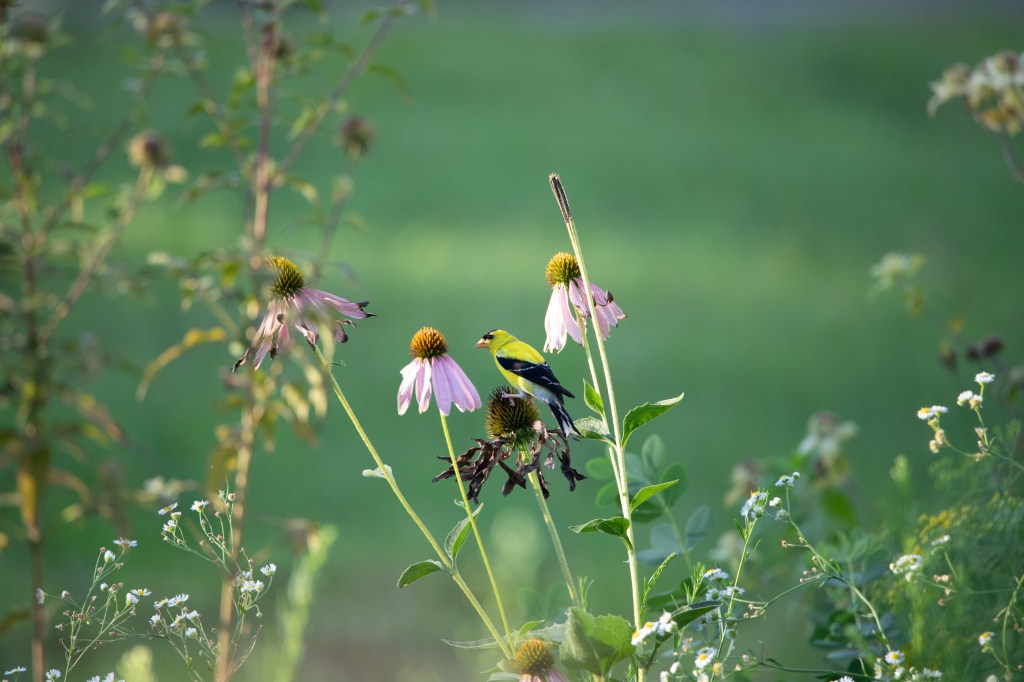
Now entrenched into my tiny university’s birding community, my lovely Biology professors invited FeederWatch members to a Jersey City Bioblitz. The team met at the university and walked to Lincoln Park, where we started strolling through a wetland that was surrounded by a golf course, a recreational park where I played high school softball, and the Newark Bay.
There, I saw a Belted Kingfisher (Megaceryle alcyon) perched on Phragmites while a reflection of the deadly Pulaski Skyway rippled in the water below. I was filled with awe and could not believe that this beautiful, tropical-looking bird was here in Jersey City of all places.
My excitement was acknowledged by the rest of the team and matched by my dear friend Hunter, but I could feel a gap in emotions between me and the rest of the birders. What was earth-shattering to me was received warmly and casually by the more experienced birders…Should I feel silly in how hype I am? Am I wrong to feel this excited?! Are they wrong not to feel this excited!?
Scanning the horizon for more insane-looking birds, I saw a group of swiftly moving erratic sprites chasing each other. Looking through my camera’s telephoto lens & lacking binoculars, I could not snap a photo or discern what I was looking at. Frustrated, I suggested to my friend Hunter that we should ask the expert birders what they could be, but a few seconds after looking at the buzzing birds, he confidently declared, “Oh, those are swallows! Probably tree swallows.” His speed at identifying these impossible-to-see birds triggered skepticism.
“Are you sure…? We can barely see them!”
“Yes, I’m sure, they were one of the first birds my grandma taught me. She was a birder and gave me a bird book, and I always liked watching the swallows.”
I trusted him, and also suddenly distrusted everyone around me. How many secret birders were among me? How could everyone know exactly what these things were so quickly and easily?! Was everyone going birding without me all these years?………??
Even more so than feeling inexperienced, I felt worried… Birds were so cool, but who would match my excitement as I learned more about them? Should a novice birder stifle their excitement? Why does learning feel embarrassing when “catching up”? When will I get to be one of the birders whose pulse doesn’t erupt upon seeing a typical backyard bird?
I have done plenty of things alone (or with others who didn’t share my enthusiasm) throughout my whole life; I prided myself on how independent I could be considering my shy and anxious nature, so why was I hung up on feeling behind or alone in terms of… birding?
A year later,
I was working at Liberty State Park and was tasked with leading bird tours. I was nowhere near comfortable leading a birding group at first, and it showed. One gracious attendee offered IDs, sharing her knowledge about dabbling vs. diving ducks freely and without judgment. At the park, I progressed in my birding, but it wasn’t until moving to Arkansas that I became more serious as INDIGO BUNTINGS and tanagers propelled me outdoors.
In Arkansas, I found myself among a bunch of graduate students and academics who all happened to be great birders. I tagged along when I could, breaking the silence with my camera shutter and my “oos” and “aa”s whenever I saw Carolina Chickadees and Tufted Titmice. My friends received my ID questions/confessions of a common bird being a “lifer” unflinchingly with grace and normalcy. I did not feel as self-conscious of my excitement and skill as the years went on, and I also got to see what made them excited. In those moments, I would hold my breath watching the expert birders first freeze upon recognizing a call, then frantically scan the reeds and tree crowns. If successful, they’d leap with joy while I was still craning my neck desperately trying to see what got them going. When I would finally catch a glimpse of the birds inducing the experts’ glee, I was disappointed that I didn’t experience a similar exaltation. I didn’t really get why they were excited until the friends shared their reasons that pertained to their higher-level appreciation of ornithology. And though I understood the reasons, what excited the experts did not really light my fire. I met their explosive enthusiasm with an anticipatory but blank expression (unable to fake excitement just as they couldn’t fake it for me)– waiting in vain for the lightbulb to go off (it eventually did, years later!).
Returning home or being outdoors with friends who haven’t birded much, I noticed that I had become the relative “expert” who did not jump up and down when seeing a cedar waxwing. Recognizing the shift and how I felt, I tried to mirror my friend’s excitement, but at times, I would get self-conscious of how quickly I move along or the fact that I did not try to get a photo.
coming back to basics…
I find myself going through phases of growth and stagnation as a naturalist. I stopped for a period of time trying to find birds that I already knew. But a few weeks ago during migration, I re-evaluated what it means to appreciate the “known.” I got to show my friend a painted bunting — 2 days after I saw my first one, in the same tree, at the same site, during similar weather. The lighting was different, though, and the male’s feathers looked much less shaggy this time! I got a much better photo & appreciated how watching the same individual bird is an experience I never got before (aside from the wren that nested outside my window!!!)…
A few days after that, I took another friend birding to the same spot. We did not see the painted bunting, and while I was devastated, it underlined the ephemeral nature of being a naturalist. Enjoy the common now before they’re gone– whether it’s natural and part of migration, or due to anthropogenic impacts… I still left with a “lifer”- an American redstart, but when I think of that birding day, I think more of these cedar waxwings my friend pointed out above the creek. I had seen a million cedar waxwings before, but never a couple “kissing”! I took photos – probably the best of a cedar waxwing I ever got. My friend and I giggled and we shared in the joy of watching two pairs flitter about– a memory we both got to leave with and cite when others asked about our trip. The individual behavior of birds is something you can’t appreciate unless you watch a lot of them, and that’s something I am still learning! Our trip was a reminder that even in the “known” and “obvious”, there are opportunities for delight, wonder, and discovery…
zooming in to zoom out to zoom inside
The minute we stop getting excited over the common things is a point of inflection. This disengagement is peddled by the subconscious, but ultimately governed by our rational minds as we decide not to look, not to stop, and not to listen. The more we know, the easier it is to close ourselves off to learning. There’s been so many moments experts have missed things because they’ve seen it all 1,000 times… While it’s fun to go out with people of the same skill level in birding and botanizing, I think it’s a lesser appreciated gift to go birding and botanizing with people from all backgrounds. As an expert, your biases can be checked as beginners and intermediates pay closer attention to the ordinary; and as a beginner/intermediate, you start to see the bigger pictures of ecology. And perhaps best of all, even if you don’t see anything new or learn anything new….how ordinary was it to appreciate the abundance of common things (birds and plants that arose millions of years ago; species and populations navigating the ever-changing landscapes and streams of pollution; small, fragile creatures thriving and surviving in the wake of global change and massive existential uncertainty long enough, allowing the songbirds to sing for you and the milkweeds to diffuse their vanilla bubblegum scent to your nose) alongside someone else?
notwithstanding, just for fun, after all that………
here’s some unvetted, unauthorized notes on what excites my birding and plant friends based on their experiences lol
beginner
inter
expert
Bald Eagles
Hawks
Turkey Vultures
Ravens
Cardinals
Blue Jays
Goldfinches
Cedar Waxwings
Cormorants
Mallards
Swans
Canada goose goslings
Mockingbirds
Grackles
Swallows
Barred Owls
Ospreys
Great Blue Herons
Egrets
Bluebirds
Chickadees
Downy Woodpeckers
Robins
Red-wing Blackbirds
Buntings
Tanagers
Grosbeaks
Warblers
Gulls
Winter Ducks
Seabirds
Gynandromorphs
Any morphs; Leucism
Green Herons
Ibises
Scissor-tailed Flycatchers
Owls
Swifts
Nut-hatches
Pileated woodpeckers
Sparrows
Shorebirds
Kestrels
Shrikes
Warblers
Vagrants
Hybrids
Range-Edgers
Anything categorically weird (dippers)
Anything with a crazy far migration route
Female birds
Grassland birds
Robins
Pileated woodpecker families
Canada goose goslings
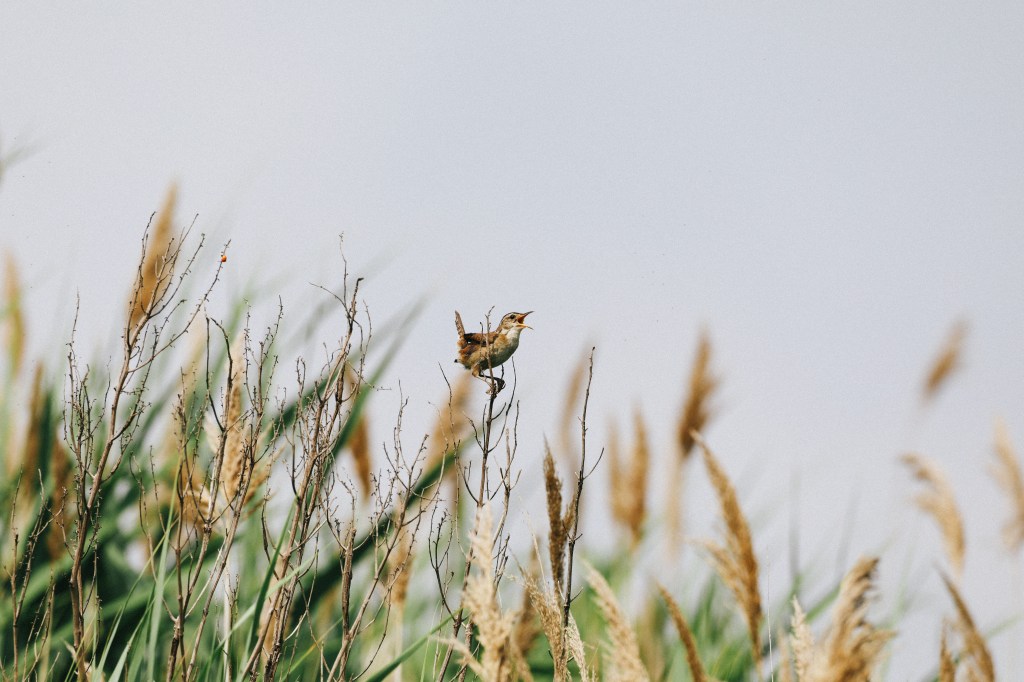


beginner
inter
expert
Invasives…(what’s that pretty flower!)
Sunflowers
Ornamentals (Tulips, Roses)
Blue bonnets
Apiaceae
Goldenrods
Violets
Whoa, poison ivy
Succulents, cacti, yucca
Birch and aspen
Redwoods
Palm trees
Big & old trees
Mosses
Red & Sugar Maples
Common Milkweed
Flowering Dogwood
Eastern Red Cedar
Black Pine
Osage Orange
Mulberries
Spring Ephemerals
Anything fruiting or flowering
Orchids
Carnivorous plants
Native lilies
Pollinator-friendly species
Succulents, cacti, yucca
Oaks
Ferns
Lichens*
Ginkgo
Castilleja
Mulberry trees
Paw-paws
Eastern Red Buds
Black walnut
Mangroves
Lodgepole Pine
Black Locust
Fragrant & Smooth Sumac
Anything with a weird life history, e.g. physiology; dispersal strategy
Anything fruiting or flowering
Anything super old or big
Anything with weird colors or shapes for what it is
Anything holding on in a degraded space
Anything that could be a county record
Anything growing in an extreme environment
Anything at the edge of its range
Succulents, cacti, yucca
Native grasses
Native sedges
Flowering rushes
Hybrids
Silene
Hickories
Milkweeds
Chinquapin oak
Native hops
*not a plant
 Lexiconcentrate
Leave a comment